
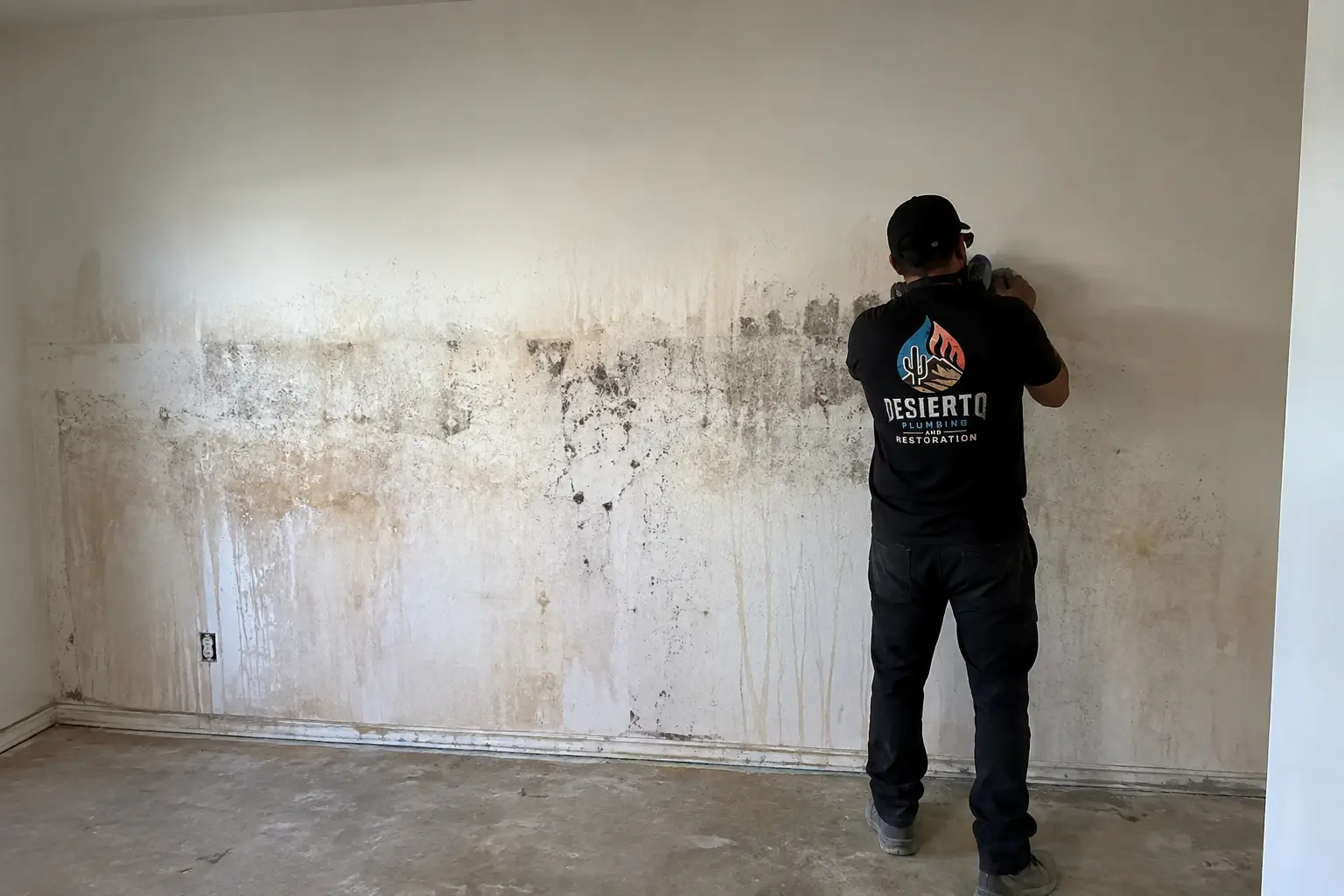
Mold Inspection & Removal · Phoenix Valley
Mold Removal Done to Standard — Not Just Wiped Away
Musty smell, dark spots, or water damage that was never dried? We find the moisture source, contain the area, remove growth safely, and verify the air.
- Free on-site assessment across the Valley
- IICRC S520 containment and HEPA filtration
- Moisture source repaired, not just the surface
- Third-party clearance testing available
Get Emergency Help Now
Tell us what happened — we respond 24/7 across the Phoenix Valley.
What You Get When You Call
- Inspection & testing
- Containment
- HEPA filtration
- Sanitization
Our Process
- 1
Inspection
Moisture meters and thermal imaging locate hidden water behind walls, under floors and in ductwork.
- 2
Containment
Poly sheeting and negative air machines keep spores from spreading into clean areas during removal.
- 3
Removal & treatment
Affected porous materials are bagged and removed; remaining surfaces are HEPA-vacuumed and treated with EPA-registered antimicrobials.
- 4
Dry, verify, restore
The moisture source is repaired, the area is dried, clearance is verified, and finishes are rebuilt.
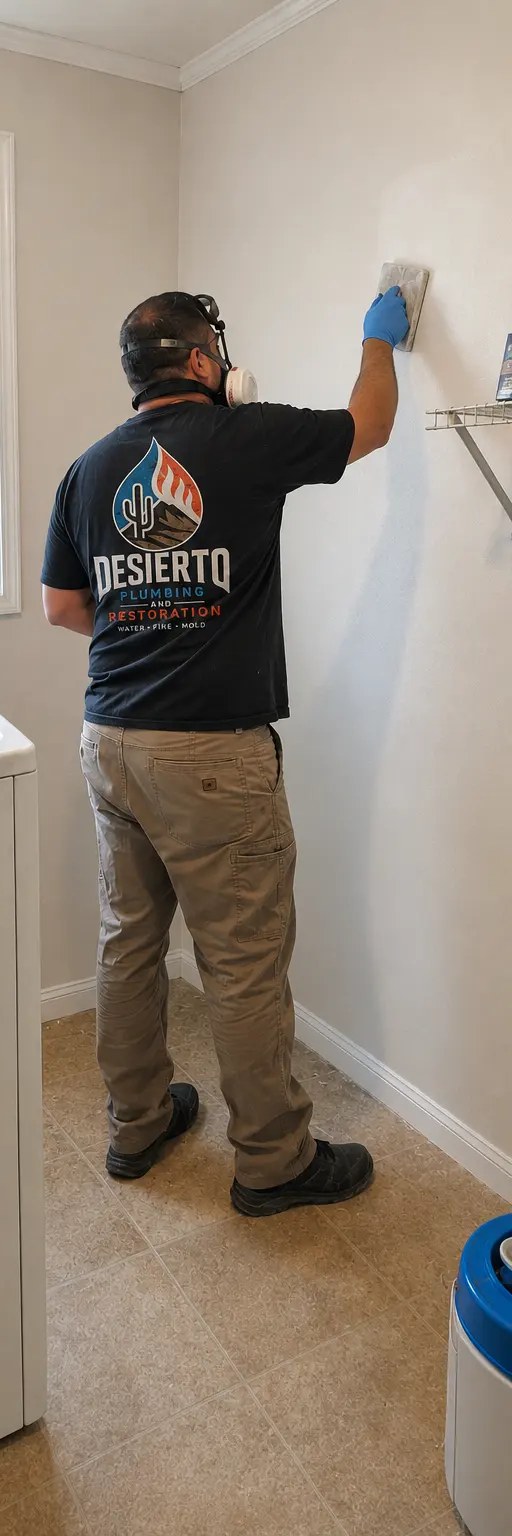
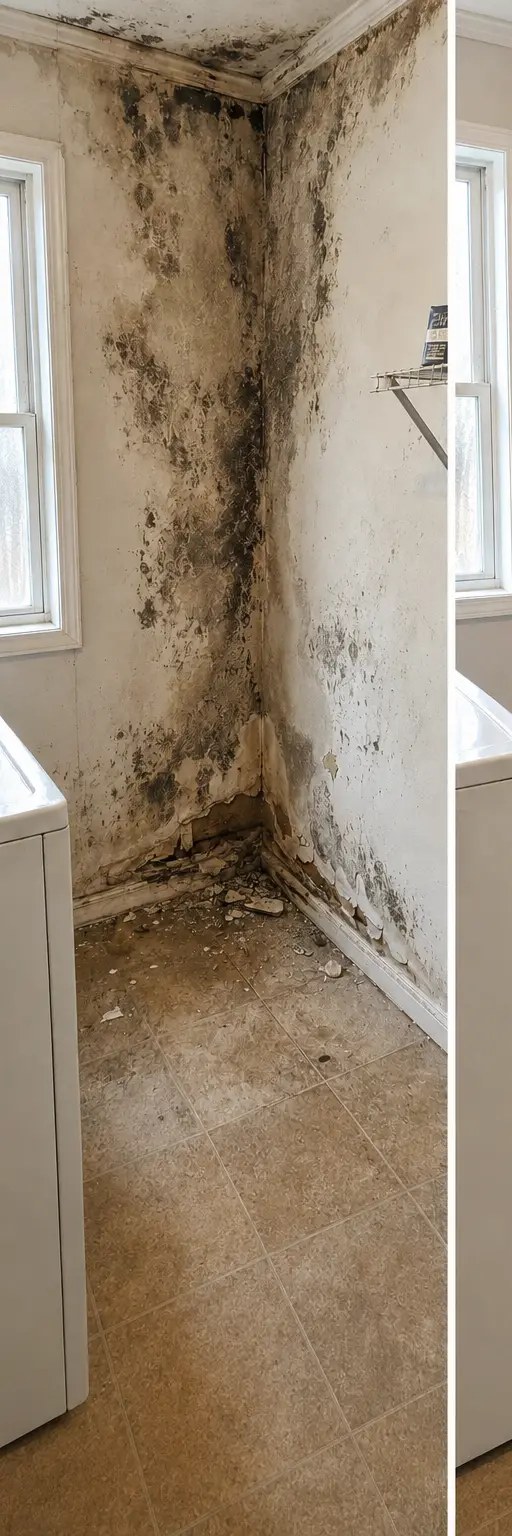
Phoenix Mold Remediation — Before & After
Drag the slider to compare
What Valley Homeowners Say
"Found mold behind a bathroom wall. Containment was set up in minutes and the area was spotless when they finished."
"They actually found the leak causing it — two other companies just wanted to clean the drywall."
"My son's asthma improved within a week of the remediation. Worth every dollar."
Trusted & Certified
Certifications & Insurance Partners
Licensed, insured, and experienced working with all major insurance carriers.
Our Certifications

Insurance We Work With






These are just a few of the carriers we work with. We bill and document claims with virtually every major insurance company — if your carrier isn't listed, call us and we'll handle it.
Frequently Asked Questions
- How do I know if I have mold?
- Persistent musty odors, discoloration, peeling paint near plumbing, or allergy symptoms that improve when you leave the house.
- Is testing required?
- Not always. Visible growth can be remediated directly, but testing gives objective documentation for larger or disputed claims.
- Does insurance cover mold?
- Coverage depends on the cause. Mold from a sudden covered water loss is often included; long-term leaks usually are not.
- How long does remediation take?
- Most residential projects run 2–5 days depending on the affected area and drying requirements.
Serving Phoenix, Scottsdale, Mesa, Chandler, Gilbert, Tempe, Glendale, Peoria, Surprise, Avondale, Goodyear, Buckeye, Queen Creek and surrounding Phoenix Valley communities.
Suspect Mold? Get It Inspected Today.
Don't wait for the damage to get worse. Our team is standing by 24/7 and ready to help.
Get Emergency Help Now
Tell us what happened — we respond 24/7 across the Phoenix Valley.